Luna Ergonomic Utility Knife | Process
An ergonomic cutting tool designed through hand studies, grip analysis, and iterative sketching to improve comfort, control, and safety during prolonged use.
Jump to section:
Design Opportunity
Create an ergonomic design to replace the standard precision knife handle that maintains users ability to perform detail work without tiring or harming the body.
User / Context
Users
Designers
Crafters
Professionals
Students
Those with arthritis or other grip-related concern
Concept exploration
Ergonomic Research
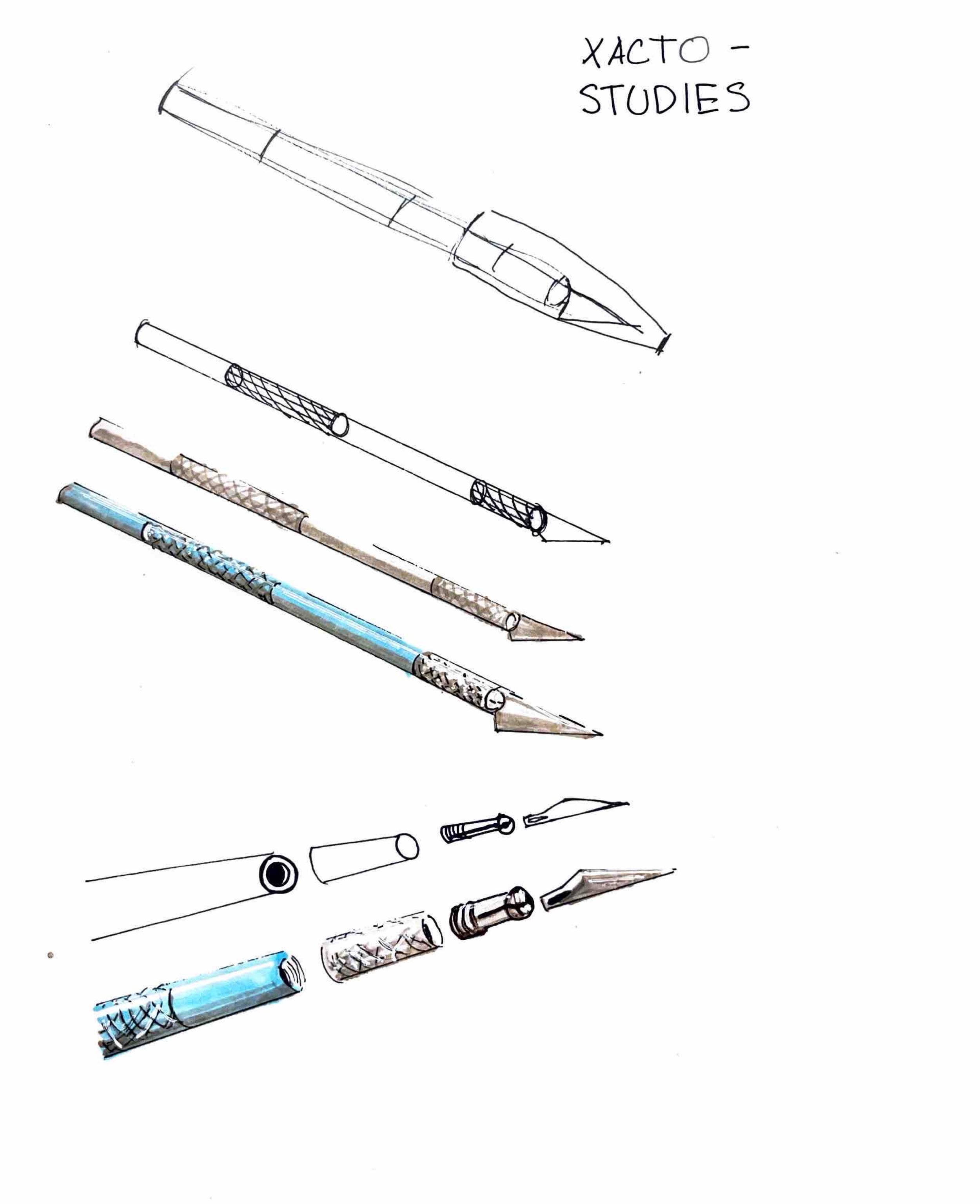
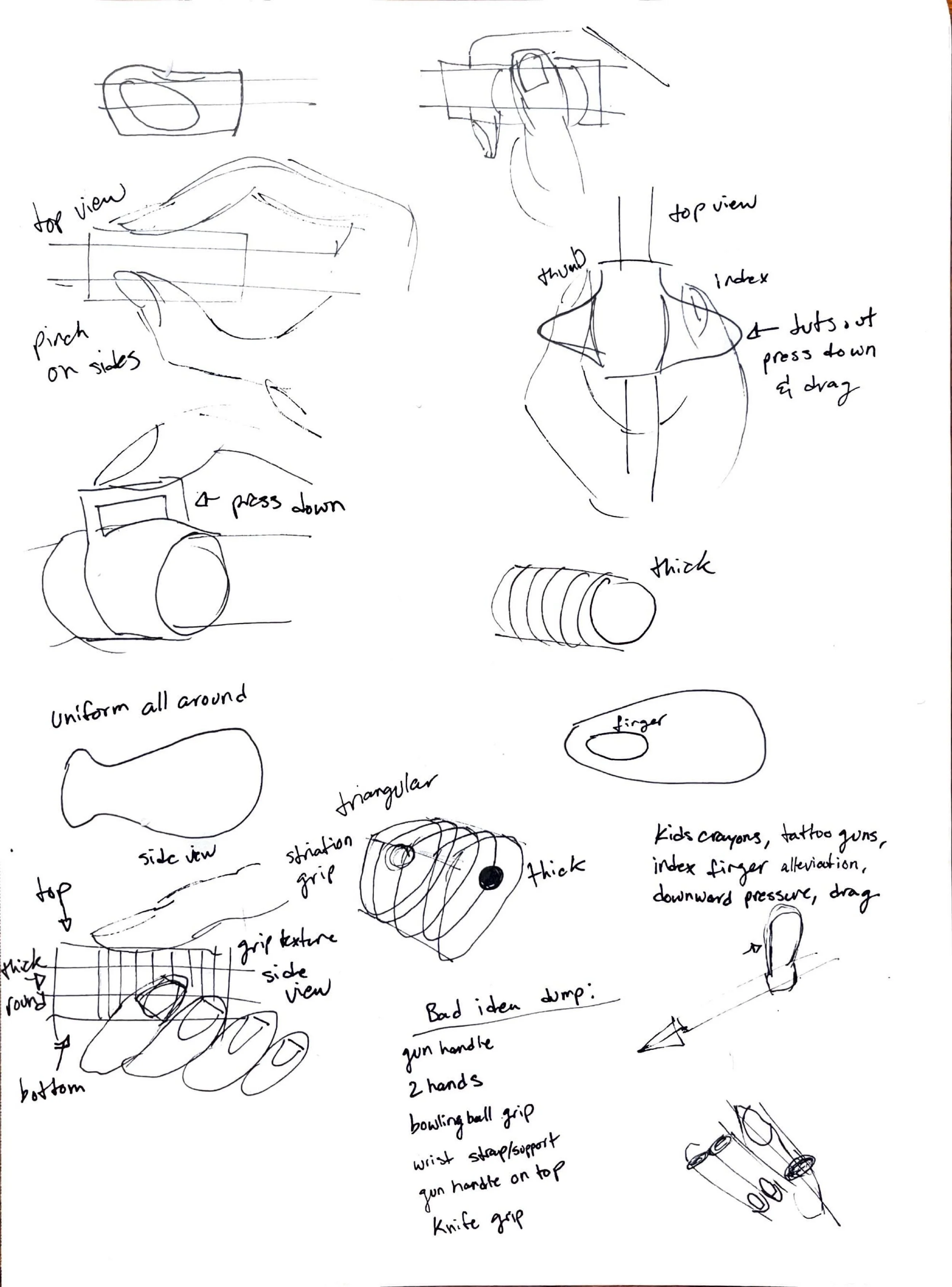
Researching precision knife pieces, and conducting minimal user testing to determine the pain-points of the standard handle.
Early Ideation
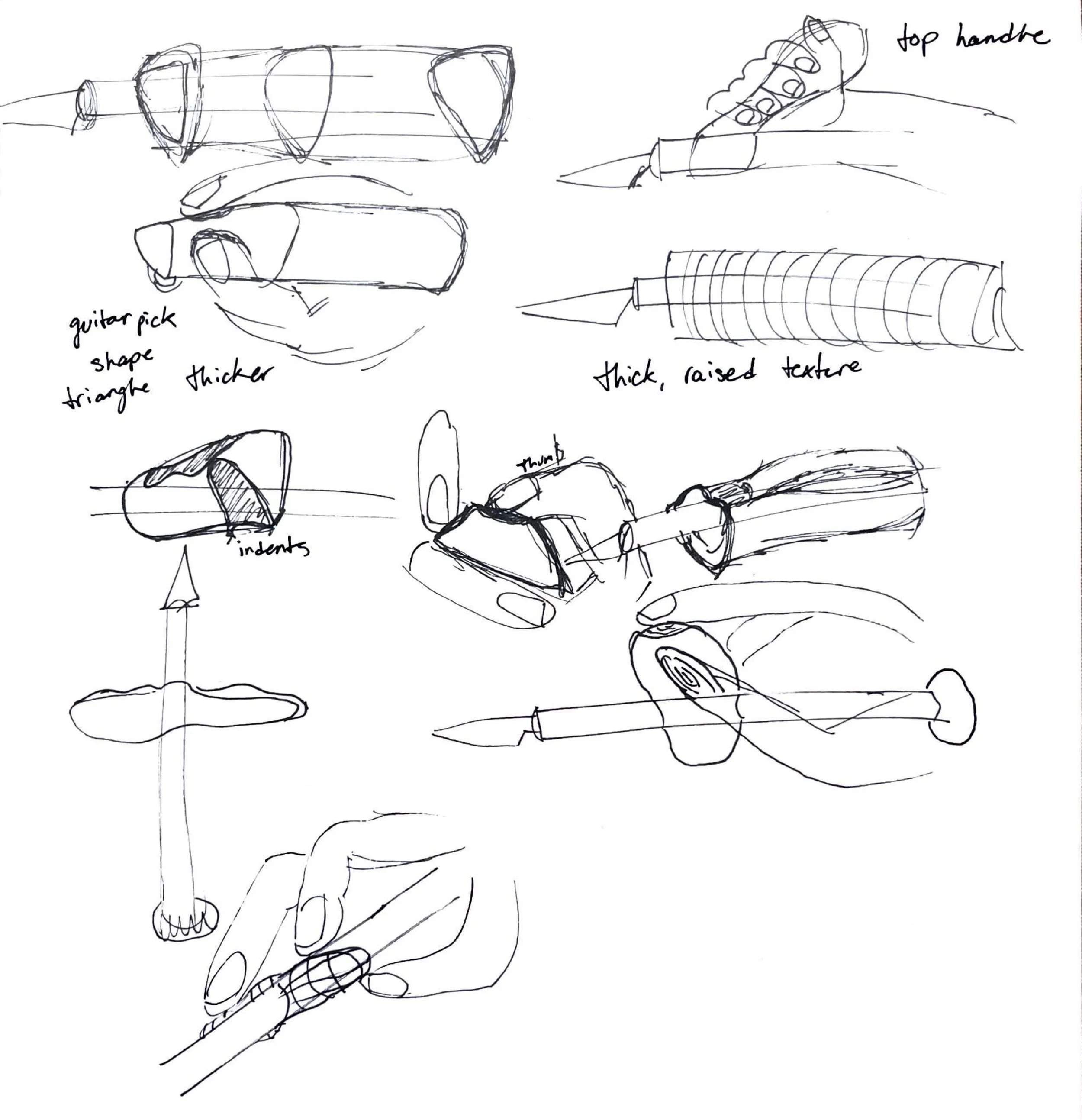
Rough lighting round sketches exploring alternative handle forms.
“No bad ideas” - stageNarrowing Ideation
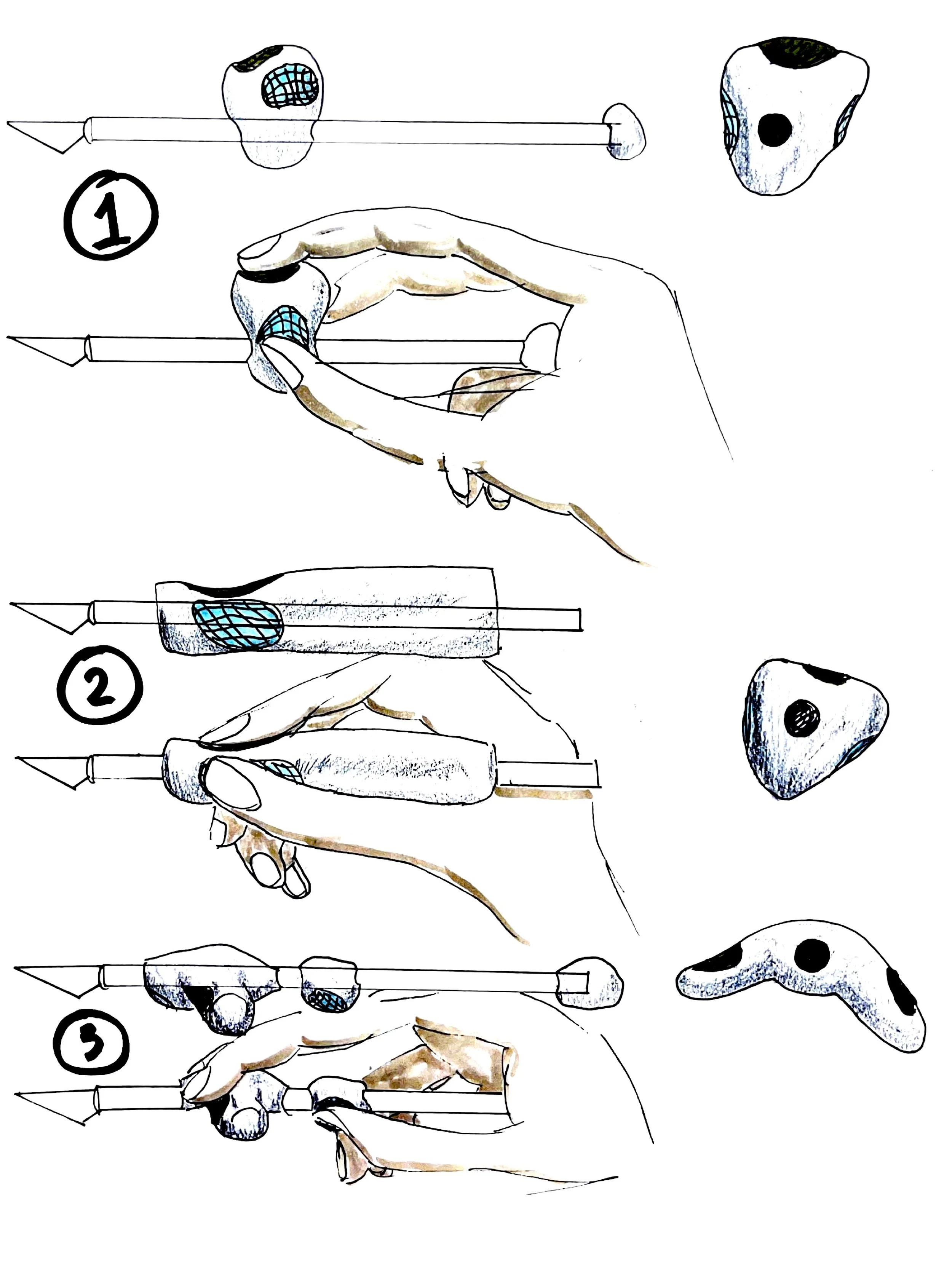
3 unique concepts with varying levels of conventionality - exploring designs that open the hand and widen the grip to prevent cramping.
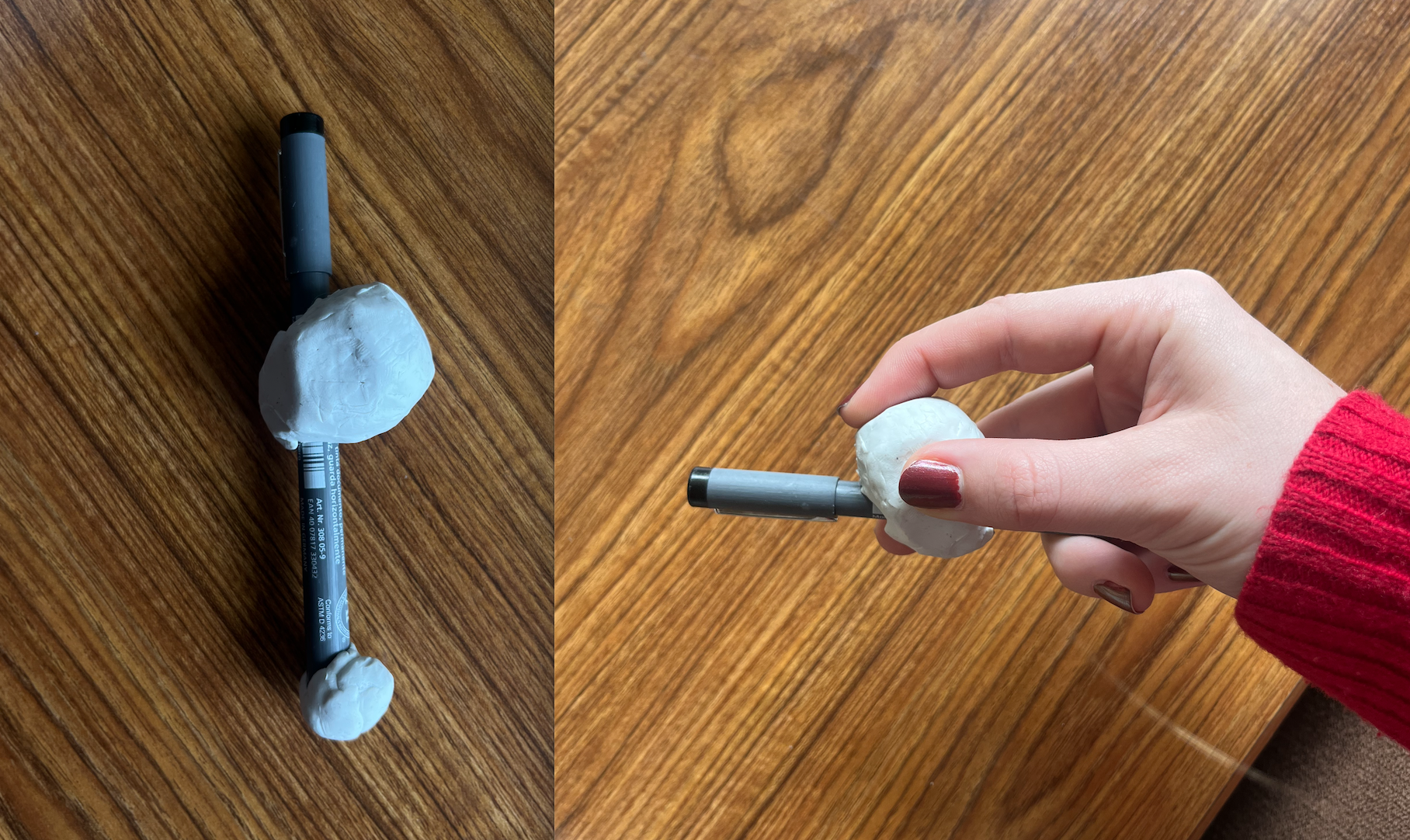
Concept Prototype #1
Clay prototype focused on
widening the grip
simple parts that could be attached to standard handle
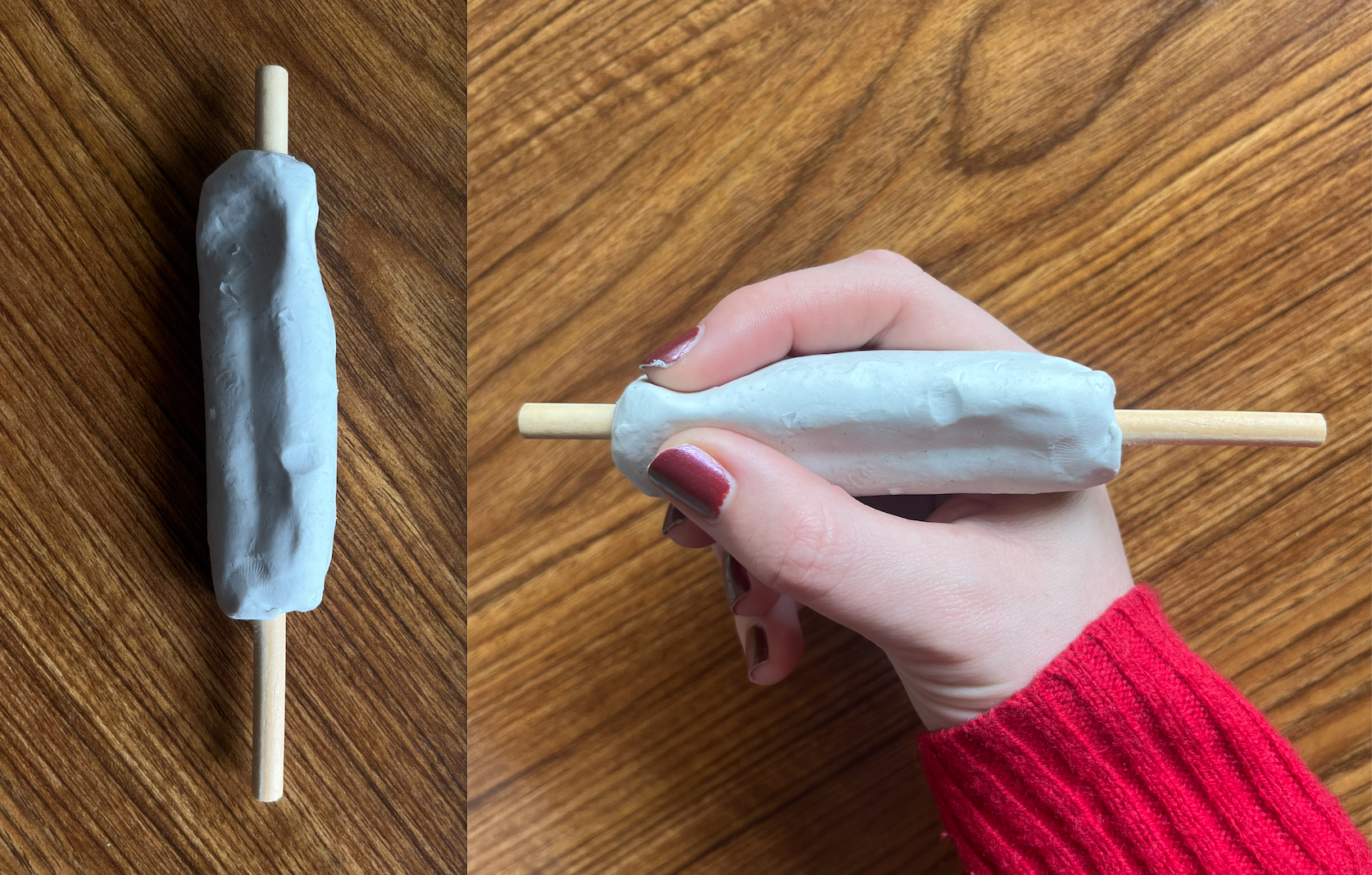
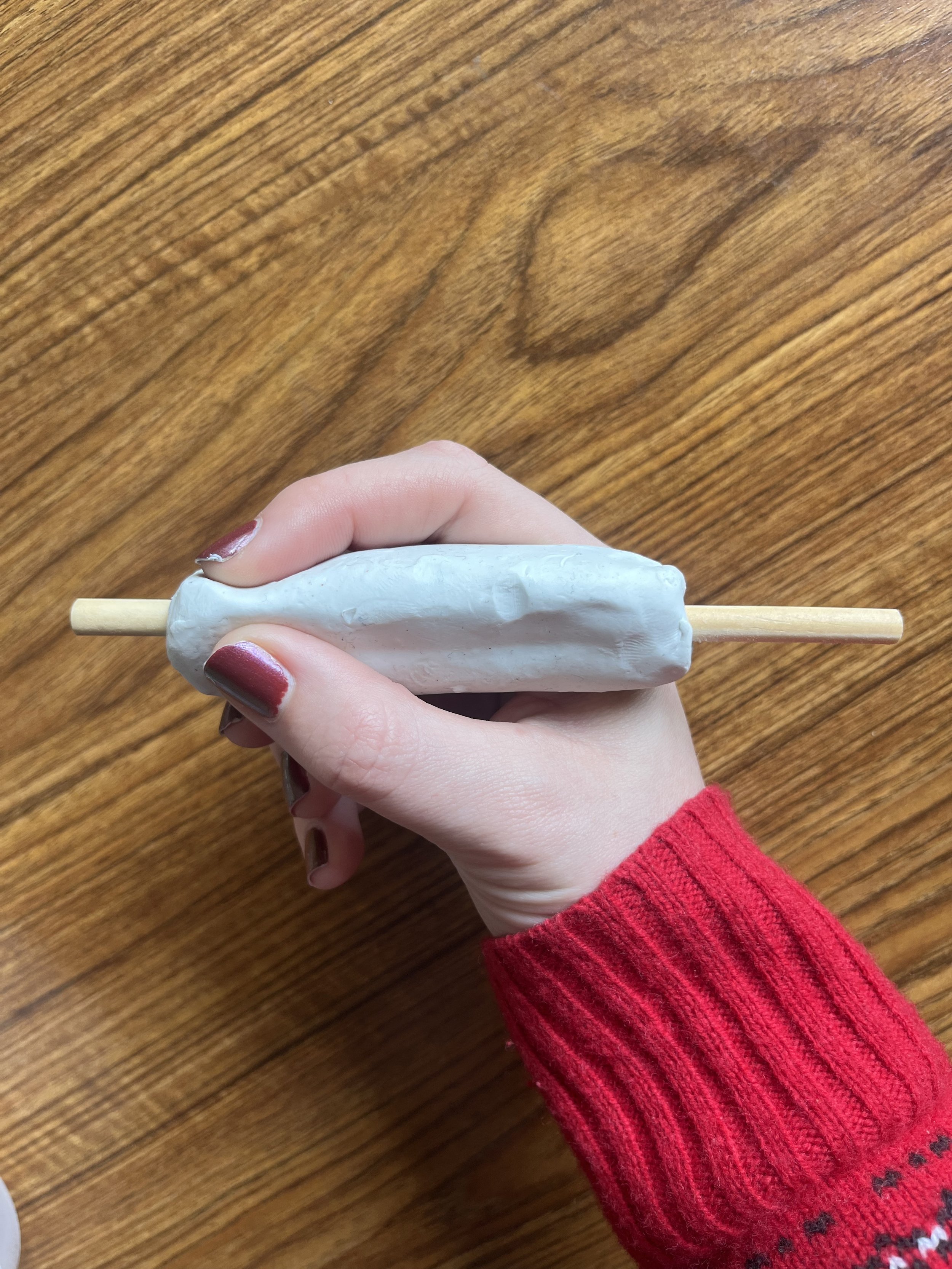
Concept Prototype #2
Clay prototype focusing on:
thicker handle - minimizes “pinching”
intuitive grip - maintaining conventionality
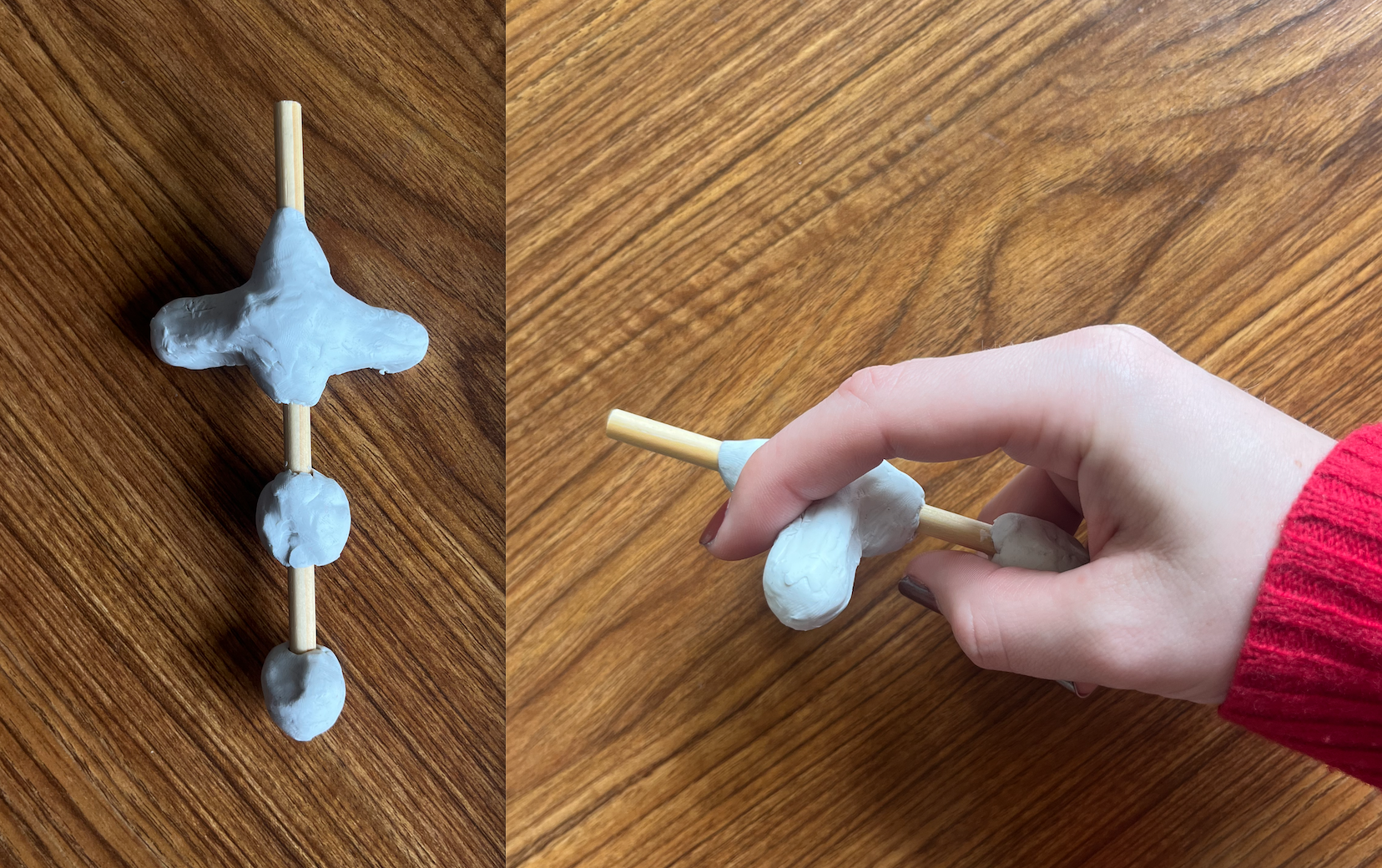
Concept Prototype #3
Clay prototype focusing on:
exploring innovative form
completely removes “pinch” motion
opens the hand to minimize fatigue and strain
Decision Making
Further Prototype Ideation - Change of Direction
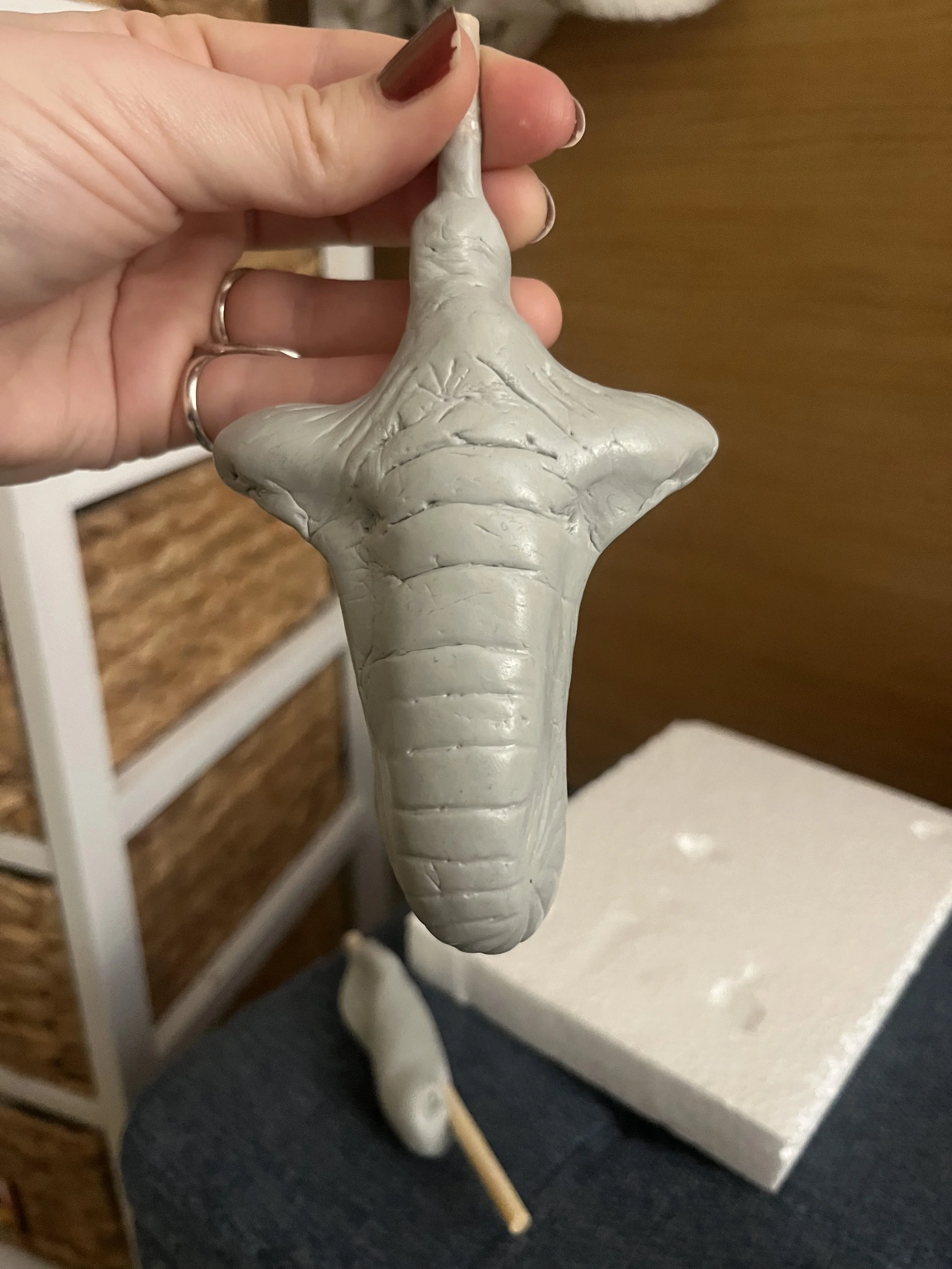
Epoxy iteration of concept #3:
Clunky concept realization
After feedback - awkward in the hand
Back to the Drawing Board
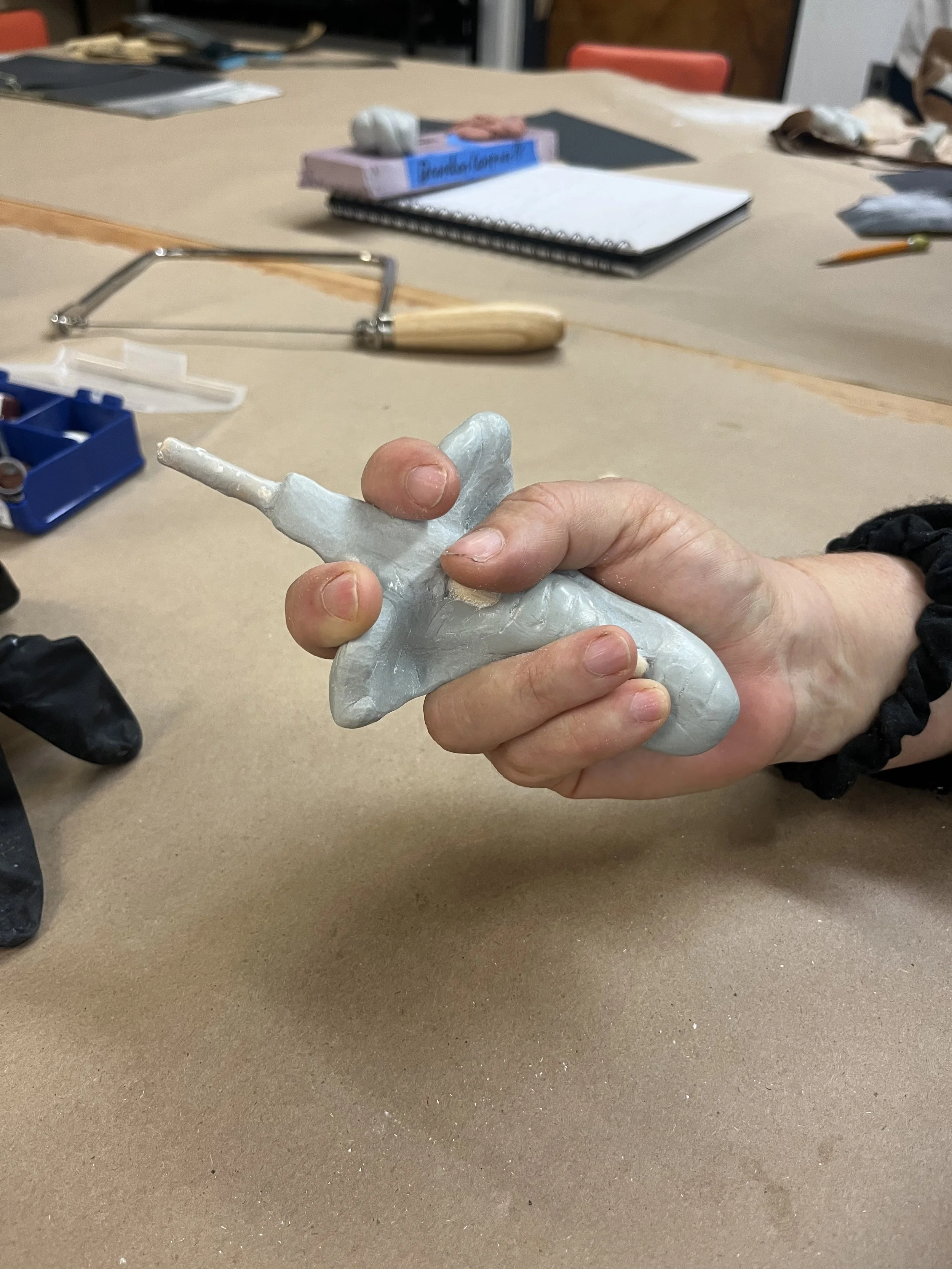
After receiving more feedback on concept #2, further iteration focusing on
minimizing pinch
opening the palm
anti-slip texture & form
offering multiple grips to minimize strain
Final Outcome
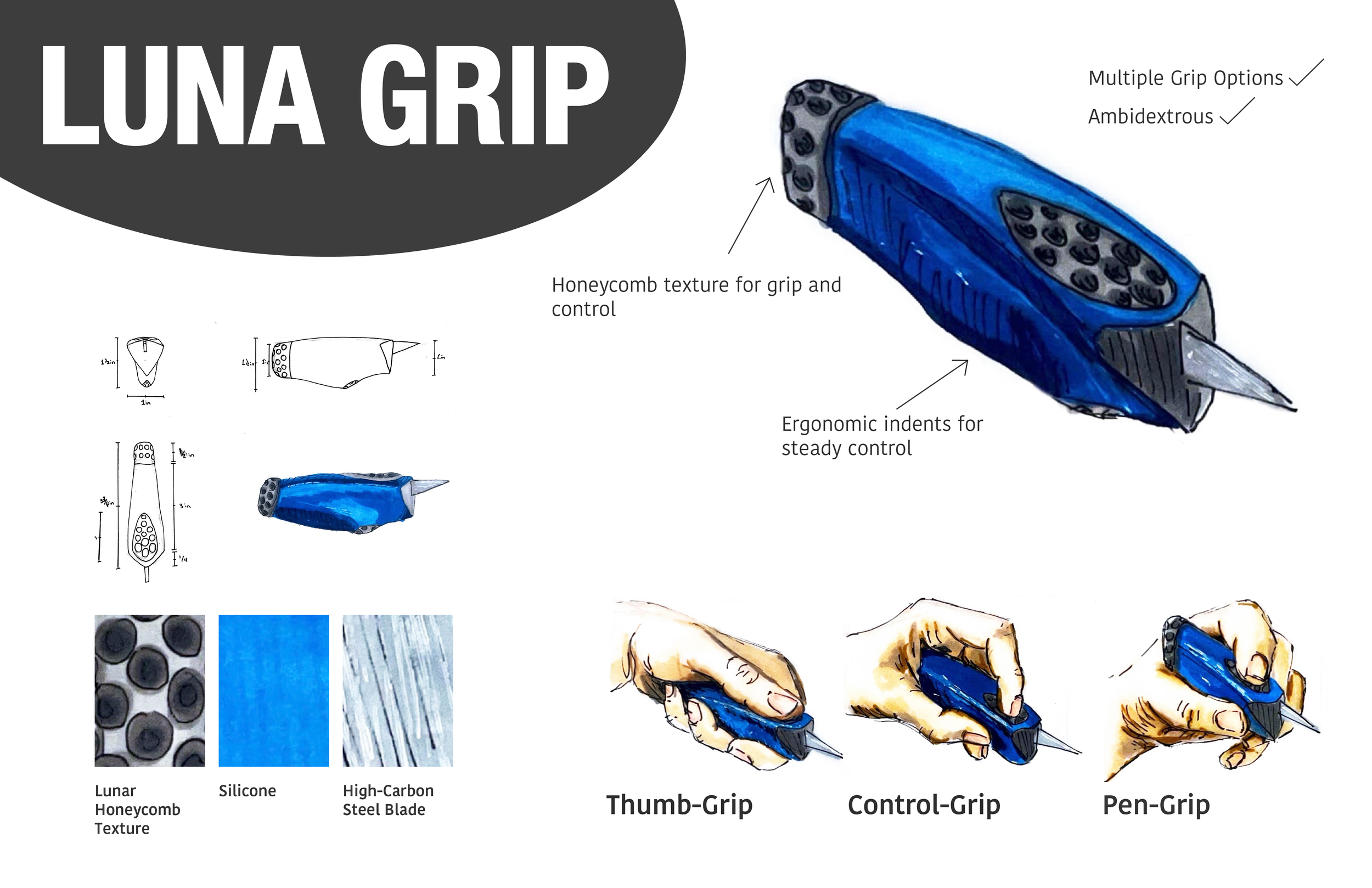
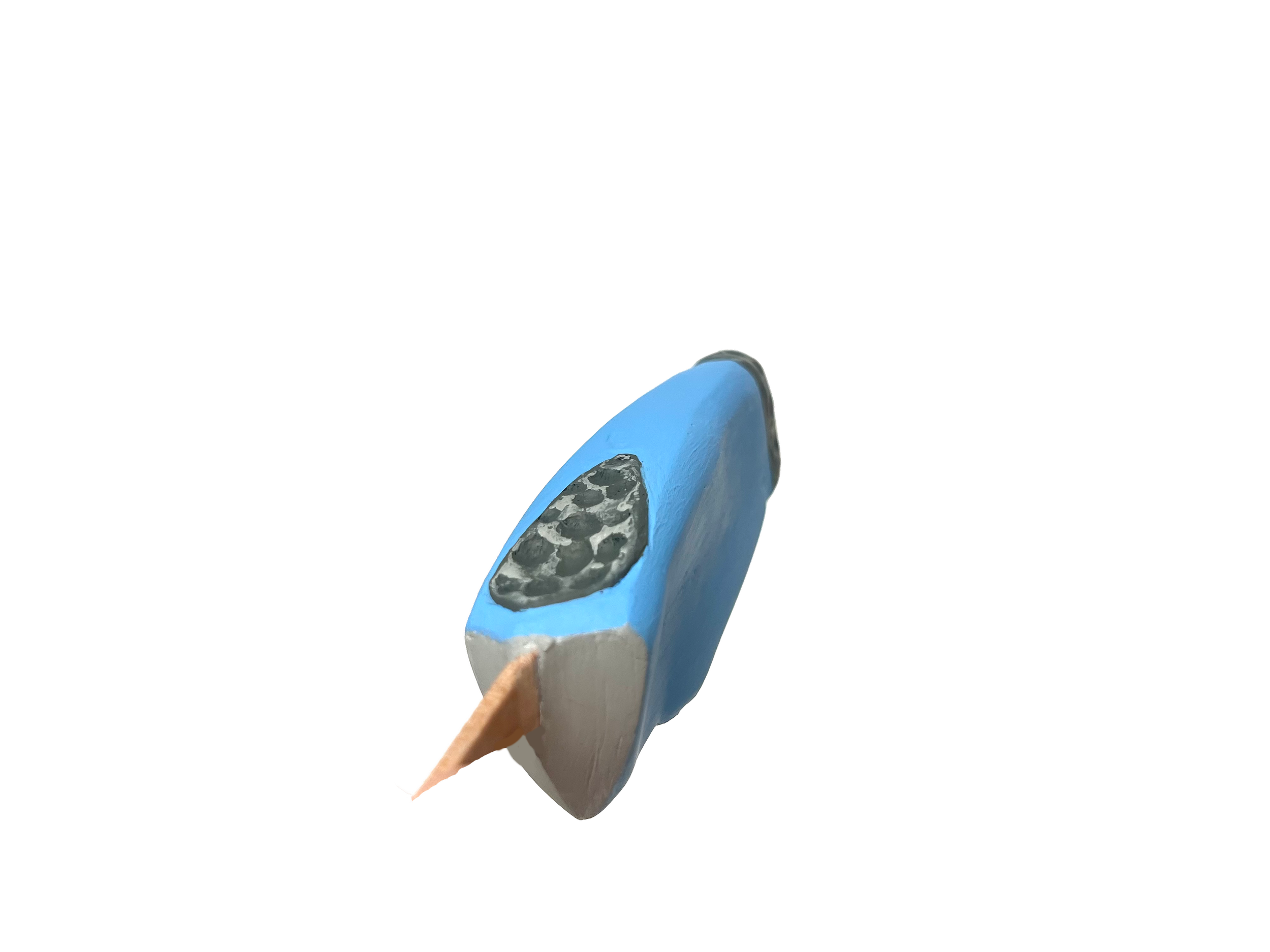
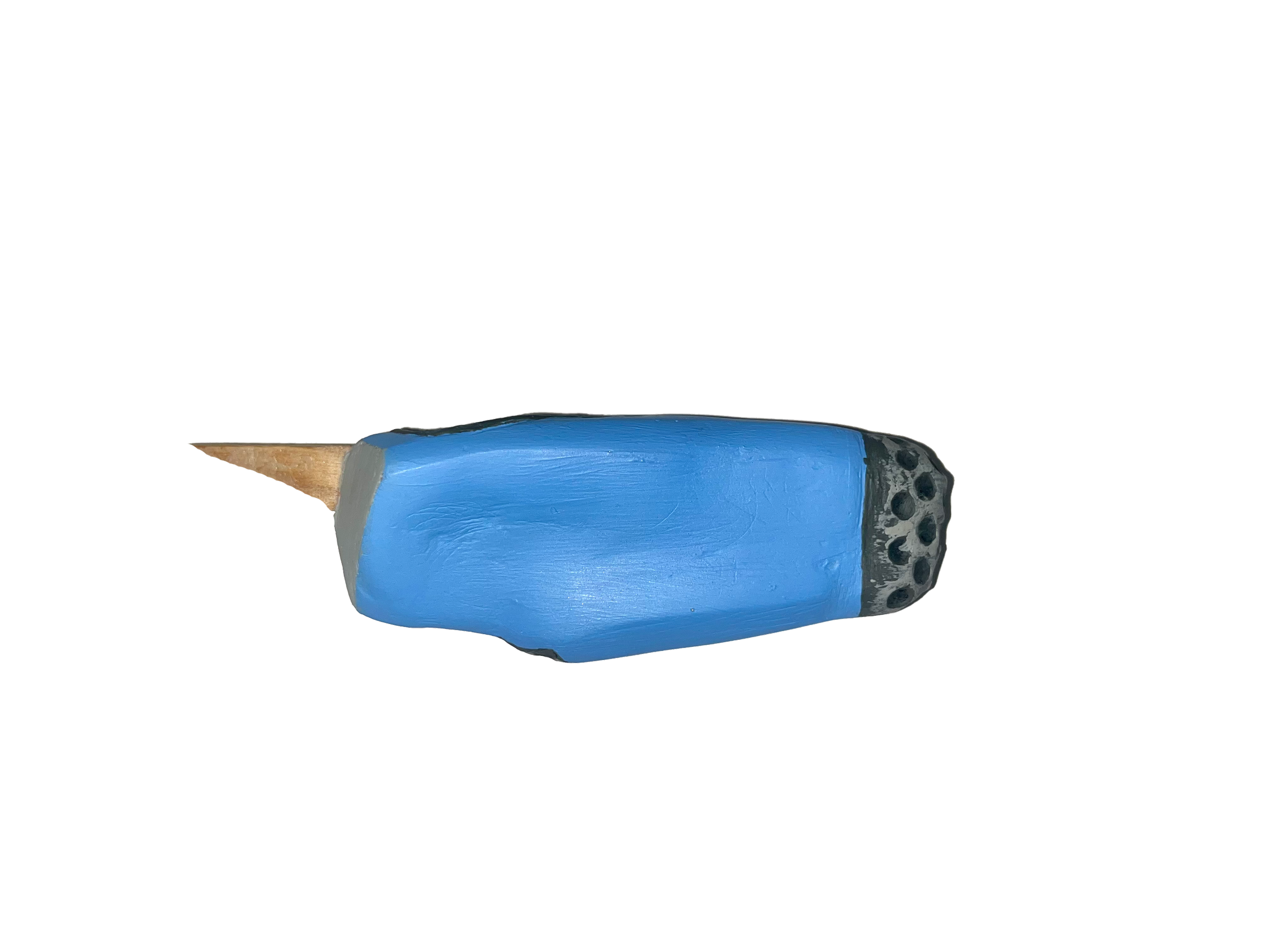
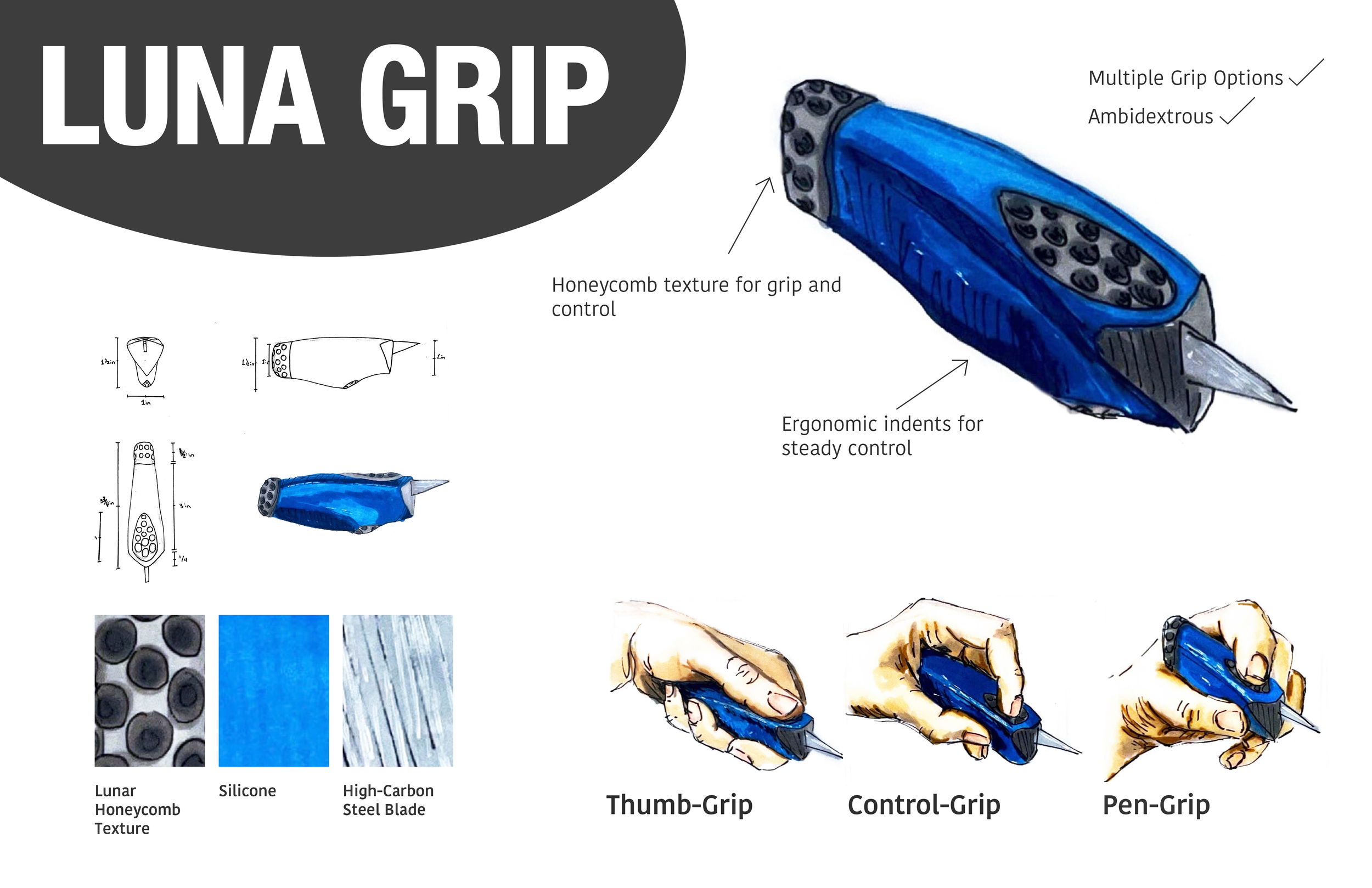
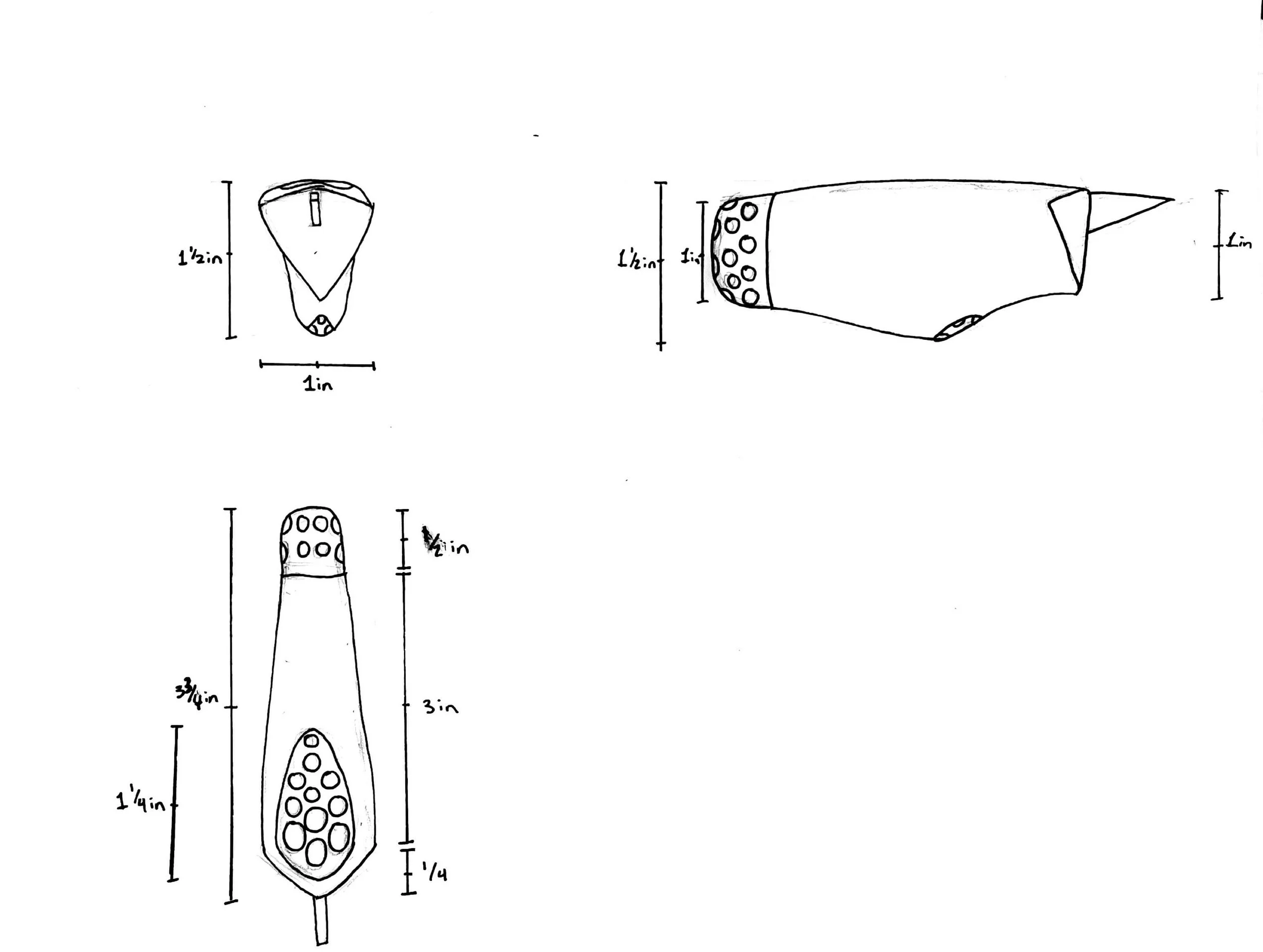
Final Design Concept
Functional precision knife handle design that minimizes strain.
Soft form and blue silicone finish contribute to a calm feel, and dimpled texture adds grip and signifies finger placement, adding to the safety of the device.
3 diverse grip options allow for precise cutting, and minimizing hand and wrist fatigue.
Final Prototype
Project Reflection
What I learned
The importance of iteration based on user feedback
Failed prototypes are an important part of the design process
Project Constraints
2 week time frame - alongside other projects
2-part Epoxy Clay (allowed prototyping material)
If I had more time, I would
Practice with the epoxy a few times before making the final prototype (very challenging material to work with)
Conduct more user testing with modeling clay before creating a final prototype
Create a higher-fidelity prototype with a more manageable material
Photo-document prototypes in a professional studio for clearer design communication